

This article contains:
- What are the potential sources of lead in drinking water?
- Why is exposure to lead potentially dangerous?
- How do you test for lead in water?
- How do I know how much lead is in my drinking water?
- Want to check of lead in your supply pipe or other sources for lead?
- What immediate steps can I take to reduce lead exposure and identify if my pipes are made of lead?
- References and further reading
More information about water tests for the Lead Water Testing as part of The Repairing Standard for private landlords in Scotland can be found here.
What are the potential sources of lead in drinking water?
Lead can be found in air, food, soil and water. High levels of lead in drinking water can be caused by a range of sources:
- The property has lead pipes or a lead lined tank
- The property has taps or fittings made of brass which contain lead
- The property has copper pipes with lead based solder or brass fittings *
*The use of lead solder in domestic water systems was banned in 1987.
Usually lead enters drinking water because of the corrosion, a reaction between the water and the lead pipe or solder. A low pH and a low mineral content in water are common causes for corrosion. Water is considered to be hard if it has a high mineral content such as salts containing calcium and magnesium.
In the UK, lead pipes are most common in homes built before the 1970’s, they were often used to join a property to the public water supply. Even when the use of lead pipes was stopped, sometimes, lead based solder was used to join copper pipes in order to save money. It has been suggested, that even brass faucets and fitting which are apparently ‘lead-free’ may leach lead.
Lead levels can decrease as a building ages, because mineral deposits can form a coating on the inside of the pipes if the water is not corrosive, this usually takes about 5 years. Overall, lead levels may be highest in older houses because of the use of lead pipes, but can also occur in newer properties because of a lack of mineral deposits within pipes.
Quick Check List: why test for lead and reduce lead levels in drinking water:
- My house was built before 1970 so may contian old lead pipes
- My pipework is dull grey or black, or has a swollen joint
- There is pregnant women and young children drinking water in the property
How do I tell if I have lead water pipes?
If your home was built before 1970 it may contain lead pipework, so arranging a water lead test is a sensible first step. Homes built after 1970 are less likely to have lead pipes because the installation of new lead pipes and the use of lead solder on drinking water systems have been banned in the UK for over 25 years.
Even where there are no lead pipes, other components such as brass fittings or incorrectly used lead-based solders can release lead into drinking water. A simple water lead test can identify contamination from these sources and help you decide whether remedial action is needed.
Start by inspecting the incoming pipework behind kitchen cupboards or under the stairs, the location where you’ll normally find your stoptap. Follow the pipe to the kitchen tap. Unpainted lead pipes are dull grey and soft; a gentle scrape with a coin will reveal shiny, silver-coloured metal underneath if the pipe is lead. If you suspect lead, collect a sample or use a certified water lab lead test kit to confirm levels before taking further steps.
Why are high levels of lead in water potentially dangerous?
Once lead enters the human body it is accumulated there and only very slowly removed. Latest medical advice suggests that lead is most harmful when it is allowed to build up in the body. High levels of lead can cause serious damage to the brain, kidney, nervous system and red blood cells. The greatest risk, even at short-term exposure, exists for young children and pregnant women.
Lead is a toxic metal known to be harmful if inhaled or ingested. A potential lead exposure can come from different sources, including soil and dust, paint containing lead, food (from contaminated containers or air), ambient air and water (mostly caused by the aforementioned lead present in plumbing and lead water pipes). The degree of harm depends on the level of exposure from all sources.
Lead can not be detected using smell or sight. We offer home tests for lead as well as laboratory testing for analysis of lead.
How do you test for lead in water?
You can perform a water lead test with a home testing kit or by sending a sample to a certified laboratory for more sensitive analysis. For reliable results, collect a cold-water sample first thing in the morning after the water has sat in the pipes for at least six hours.
For the full range of test kits for Lead click here.
- Test for lead in water: self-use field test single / laboratory test
- Test for lead in paint: self-use field or laboratory test
- Test for lead in soil
- Test for lead in urine, food or other organic substances
How do I know if there is lead in my drinking water & when do I carry out a lead water test?
You should have your water tested for lead, especially when you see lead pipes or signs of corrosion. Lead pipes are of dull grey colour, which are soft enough so that they can easily be scratched with a key. Signs of corrosion are rusty coloured water, frequent leaks, stained dishes or laundry. If your home was built before 1970 the risk that it may have lead pipes is higher. The UK maximum contaminant level for Lead in tap water set by DWI/DEFRA is 10µg/l (=10ppb = 0.01mg/l = 0.01ppm).
It is recommended that you test water at different times of the day as the lead content can vary depending how often the pipes have been flushed. When testing water for lead, make sure to use water that has been sitting in the pipe for a while (like the first water drawn in the morning) as lead dissolves slowly in water.
More information about Lead Water Testing as part of The Repairing Standard for private landlords in Scotland can be found here.
What easy-to-use and reliable lead water test kits are there to show the amount of lead in my water?
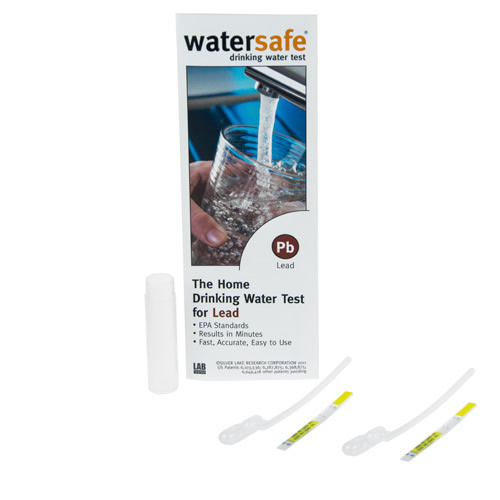
Watersafe Water Lead Test Kit (single): tests the presence of lead in water. This test will give a positive result if lead is measured above 5ppb* (parts per billion) (or the equivalent of one drop in a large swimming pool). *5ppb = 5µg/l = 0.005ppm (= 0.005mg/l).
Home Test Kit for Lead – range (single): tests the level of lead in urine, saliva, water*, dust, dirt, paint, rice, milk, food, dishes, glasses. This test will give an indication about the amount of lead included with a sensitivity of 0, 0.02, 0.05, 0.1, 0.2, 0.5, 1.0, 2.0 ppm (parts per million). (*not recommended for tap water due to the high detection levels).
Laboratory Test for Lead: a professional laboratory test gives a very detailed measurement of the amount of lead in water. The kit contains everything required to carry out the test, including detailed instructions and shipping cost to the laboratory.
eXact LeadQuick Photometer: this handy little device is ideal for users who test for lead in water regularly. It is waterproof, easy to use, delivers quick results with a high precision and testing range.
Want to do a quick test kit for lead for other sources of potential exposure for lead?
Lead can be found in soil, water, paint and food items:
- Test for lead in paint: self-use field or laboratory test
- Test for lead in soil – check a soil sample for lead
- Use a lead test kit, which measures the amount of lead in your water in ppm. This test can also be used to test urine, saliva, foods (i.e. fish), paint, dishes, glasses etc. Additionally this urine test kits for lead can also be used to see how much you & your family have potentially been exposed to lead.
- Alternatively, we also offer heavy metal test kits which can test the total amount of heavy metals in urine, water, food etc or water.
Should you find lead in your drinking water, then we would strongly recommend to contact a health professional for further advice and try and find the source of the pollution.
What immediate steps can I take to reduce lead exposure other than using a water lead test?
1) Lead in drinking water:
- Don’t consume water which has been sitting in the pipe for a while, ie. overnight. Let the water run until it becomes as cold as it can get, one washing up bowl is usually enough. This should be done for every tap – a shower will not flush your kitchen tap. Flushing is important because the longer water is exposed to lead pipes or solder, the more lead it is likely to contain.
- Don’t consume water from the hot tap because hot water dissolves more lead more quickly than cold water. Always use cold water to make baby formula.
- If you can, ie. have a private water supply, treat water to make it less corrosive, this should generally save money as it reduces damage to plumbing.
- There are some water filters available which can remove traces of lead, their effectiveness can vary so make sure that you research your chosen product & change filter cartridges regularly.
- In the long-term it is recommended to replace any lead pipes.
2) Lead in other sources:
- Make sure children wash their hands after playing outside.
- Only remove paint if you are sure it contains no lead, otherwise contact an expert to do so.
- Don’t store food in open cans.
References and further reading:
Drinking Water Inspectorate www.dwi.gov.uk
British Water www.britishwater.co.uk
There are strict standards for the quality of drinking water within Europe mainly laid down in the EU Drinking Water Directive (98/83/EC). These are based on advice from the World Health Organisation (WHO).
Further Free Resources:
Got a question about water testing? Try our complete list of Free Water Testing Resources. Discounts for bulk purchase available, please contact us to find out more.
Disclaimer: Only opinions based upon our own personal experience or information detailed in academic journals or other publications is cited. This has been done exclusively for anyone who is interested in this subject but is not intended to replace proper analysis. We cannot accept responsibility and liability of any kind which may result from the application of this information. We always recommend to consult an expert to discuss any test results or get a full recommendation on the specific subject and specific to your situation by an expert.
This information is owned by SimplexHealth and you do NOT have the right to reprint, sell, auction or distribute this information.